

Swimming with the whale sharks in Mozambique
Diving with Whale Sharks in Mozambique: The Ultimate Marine Adventure
Diving with whale sharks in Mozambique is one of the most unforgettable wildlife experiences in the Indian Ocean. These gentle giants, the largest fish on the planet, frequent the warm waters off Inhambane’s coastline—especially around Tofo, the Whale Shark Capital of Africa. This region is known for consistent whale shark sightings, marine biodiversity, and responsible dive operators offering life-changing encounters with these endangered species. Whether you’re snorkelling alongside them or scuba diving deeper reefs, Mozambique offers exceptional opportunities to witness whale sharks and manta rays up close.
When is Whale Shark Season in Mozambique?
The prime whale shark diving season in Mozambique runs from October to March. This is when seasonal plankton blooms attract pods of whale sharks to the Inhambane coastline. However, thanks to a year-round resident population, lucky divers may still spot these magnificent creatures during other months too. During high season, the odds of multiple sightings per outing are excellent, making this an ideal time to book your Mozambique diving holiday.
Swimming vs Diving with Whale Sharks
There are two ways to encounter whale sharks in Mozambique: snorkelling and scuba diving. Snorkelling trips allow guests to swim at the surface with fins and masks, making it accessible for non-divers and families. Scuba diving offers a more immersive experience, taking you deeper into whale shark feeding zones. Choose your experience based on your comfort level and dive certification. Ethical operators will always brief you on protocols, ensuring a respectful and low-impact experience for both swimmers and the whale sharks.
Snorkellers often encounter whale sharks during ocean safaris, which also offer chances to see dolphins, manta rays, and turtles from the boat. Meanwhile, divers may witness the whale sharks cruising deeper along the reef edges or ascending slowly into the blue. Both options offer unforgettable opportunities.
Marine Ethics: How to Interact with Whale Sharks Responsibly
Whale sharks are classified as vulnerable by the IUCN, and responsible interactions are essential for their protection. These gentle filter-feeders face increasing threats from boat strikes, overfishing, and habitat loss, so every encounter should prioritize their well-being. Divers and snorkelers must never touch, feed, or obstruct their movement. Always enter the water slowly and stay at a respectful distance—at least 3 meters from the head and 4 meters from the tail. Refrain from using flash photography, avoid loud noises, and choose reef-safe sunscreen.
This will be the most incredible experience in your life, a humbling and rejuvenating interaction with an ethereal sea creature with a heart as big as its body. They are not whales at all but unique fish that grow as big as whales. Never touch one of these protected species and respect their boundaries at all times. Humans are their only threat and they are an endangered species thanks to commercial fishing, by-catch losses, devastating strikes by boats and habitat loss. They rely on plankton to survive and the future of plankton also hangs in the balance with climate change and other human impacts on the oceans.
Follow these guidelines and protocols when diving with Whale Sharks Mozambique:
- Do not make a noise when entering and leaving the water – do not jump from the boat but rather slide in slowly feet first and reduce splashing with fins at all times.
- Never touch a Whale Shark, simply observe and learn from them.
- Stay well away from them, respecting their boundaries and territories in this ocean as we are the visitors and we do not belong in their watery habitat. Stay at least 3 m from the head and 4 m from the tail. If a whale shark swims towards you, stay calm and let the animal swim between you if you are in a group.
- Snorkel in a calm and slow manner and never go after the Whale Shark or get in its path. Observe it from the side or near its pectoral fins – let the shark decide what it wants to do during this encounter with you, the human, and if it banks dives away, you know it has had enough.
- Keep cameras away from the sharks and don’t point any cameras at the Whale Shark’s face. Be discreet with photos.
Your actions directly impact marine conservation in Mozambique!
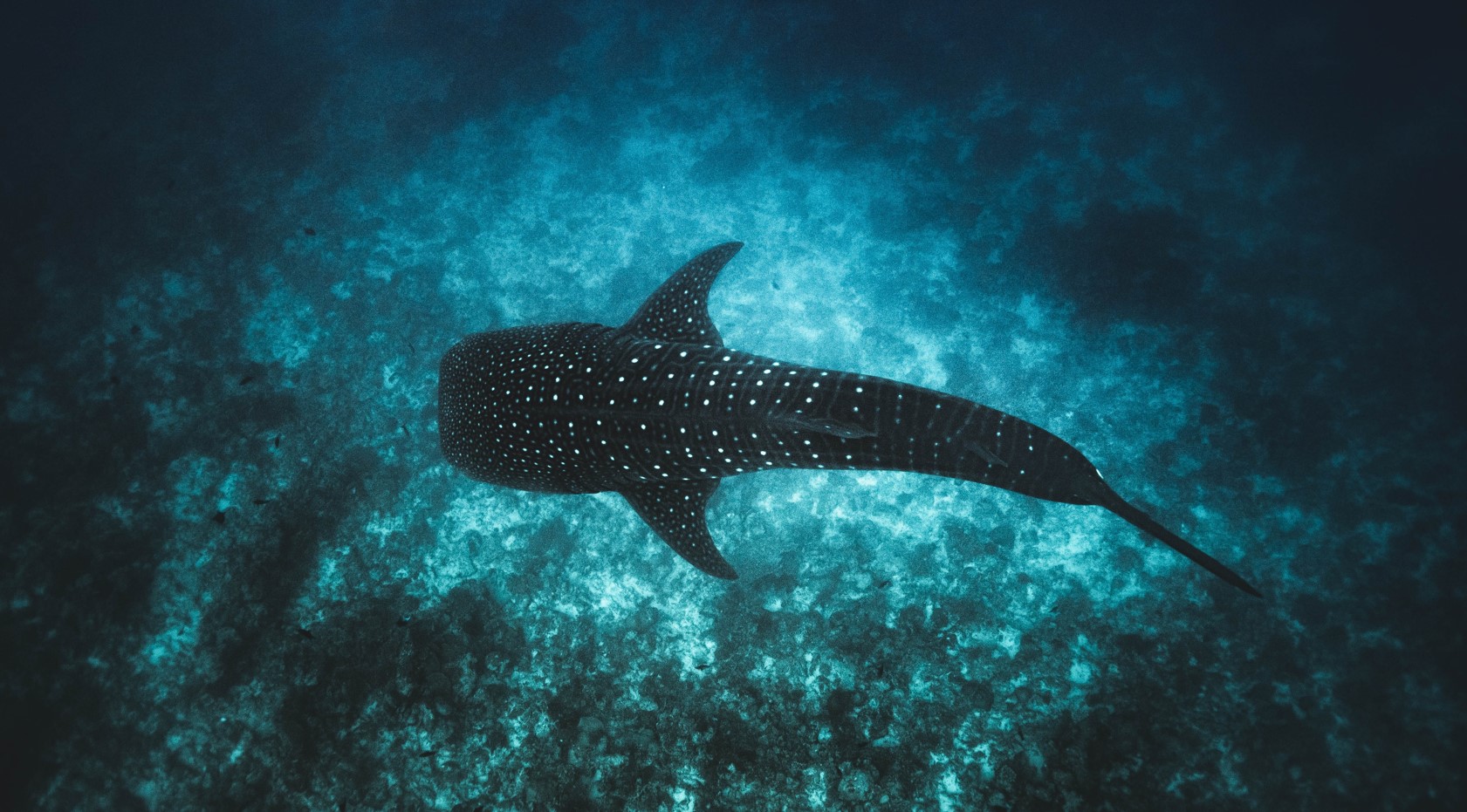
Why Whale Sharks Love Tofo & Barra Beach Mozambique
Tofo Beach and nearby Barra are the most reliable locations to see whale sharks in Mozambique. These areas form a unique underwater corridor where nutrient-rich waters attract high concentrations of plankton—whale shark food. Juveniles often linger in the region to feed and grow, offering consistent sightings near famous dive sites such as Manta Reef and The Office. The combination of plankton density, warm waters, and minimal boat traffic makes Tofo one of the world’s best destinations for responsible whale shark encounters.
Marine Wildlife to see in Tofo Mozambique
Tofo’s warm Indian Ocean waters are home to some of the richest marine biodiversity in Africa. Dive beneath the waves or cruise along the surface, and you’ll encounter an astonishing variety of sea creatures all year round. Expect to see all five species of sea turtles, multiple types of dolphins, both reef and oceanic manta rays, and a wide variety of stingrays—including the elusive smalleye stingray, one of the rarest in the world. The shark population is just as impressive, with white tip and grey reef sharks regularly spotted, as well as occasional sightings of leopard sharks, whale sharks, hammerheads, bull sharks, tiger sharks, and even great whites. Whether you’re exploring Tofo’s shallow coral gardens or its deeper cleaning stations, there’s always something spectacular to see.
Whale Sharks: Always Around, but never predictable
Whale sharks are permanent residents in Tofo’s waters, with no fixed season. Their numbers fluctuate throughout the year depending on plankton concentrations, which shift with the ocean currents. Sightings tend to happen near the surface, especially during surface intervals between double dives.
Although they’re seen often, whale sharks are wild and free-roaming, so encounters can never be guaranteed. But when conditions align, swimming beside the largest fish in the ocean is an unforgettable highlight.
Humpback Whales – June to November
The only species with a predictable calendar in Tofo is the majestic humpback whale. These gentle giants migrate to Mozambique’s coast between June and November to calve and mate. August and September are the peak months, offering the best chances for sightings.
You can’t enter the water with humpbacks, as they’re in a vulnerable phase of their lifecycle. But boat-based viewing during dive surface intervals or Ocean Safaris often delivers dramatic breaches and fin slaps. You might even spot them from shore of Tofo’s beach, while sipping a cold 2M beer from one of the local restaurants.

Mantas Below, Whale Sharks Above
Manta rays favor Tofo’s deeper dive sites, typically over 20 meters, where they visit cleaning stations to be groomed by smaller reef fish. Divers have a roughly 15% chance of seeing these elegant creatures on a deep dive, and many sites have two or more cleaning stations where mantas may glide through.
In contrast, whale sharks are rarely spotted during dives—they prefer to feed near the surface, often just a meter or two below. We actively scan for them en route to our southern dive sites and during every Ocean Safari outing. If conditions are right and a whale shark is spotted, we get in the water to snorkel alongside them. Dolphins, turtles, and other surface-dwelling marine life often join the show, making every trip out to sea an adventure
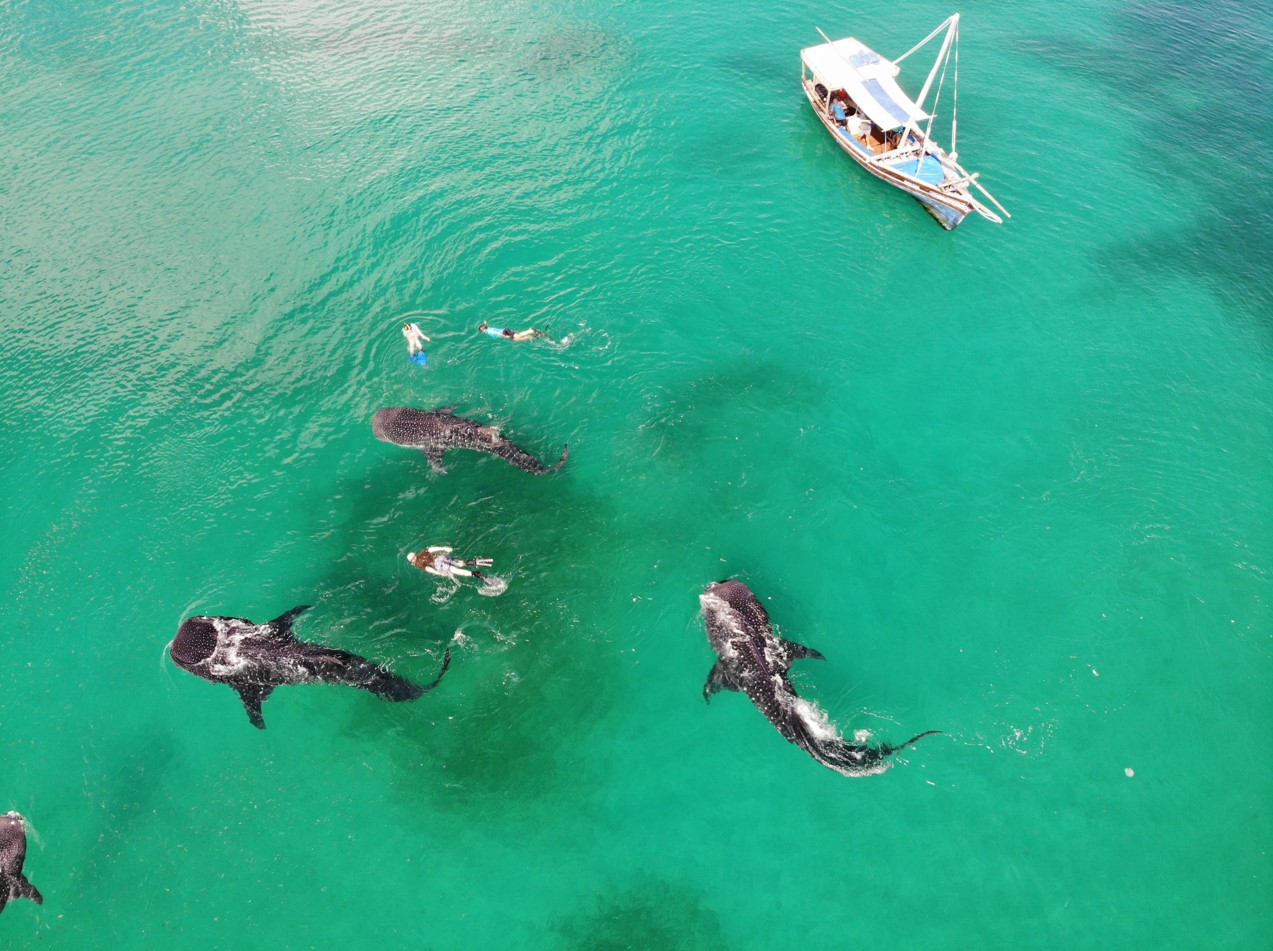
Where Else to See Whale Sharks in Mozambique?
- Bazaruto Archipelago National Park
Bazaruto’s remote islands boast some of Mozambique’s most exceptional dive sites, including Two Mile Reef and Five Mile Reef—vibrant coral systems teeming with life. Whale sharks glide through these crystal-clear waters between October and April, joined by playful dolphins, graceful manta rays, and nesting turtles. As part of the Bazaruto Archipelago Marine National Park, the region offers protected habitats and extraordinary biodiversity for divers and snorkelers alike. - Ponta do Ouro & Ponta Mamoli
Southern Mozambique’s protected marine reserve is ideal for both novice and experienced divers. The offshore reefs support whale sharks, manta rays, reef sharks, and even the elusive dugong. Marine turtle nesting grounds and lush coral beds round out the region’s biodiversity. - Barra Beach
A short drive from Tofo, Barra offers drift dives, manta sightings, and whale shark interactions with fewer crowds. The Indian Ocean here is warm and clear, making it excellent for underwater photography and long snorkeling sessions.
Whale Shark Behavior: What Makes Them So Special?
Whale sharks are filter feeders, using their massive mouths to scoop up plankton and small fish. Despite their size—growing up to 18 meters long—they are docile and calm in the water. Divers often report a feeling of peace and awe when encountering them. Interestingly, they can sleep with half their brain awake to maintain buoyancy and breathe at the surface. These unique behaviors make every encounter a humbling privilege, one that calls for mindfulness and conservation-focused travel.
Each whale shark has a unique pattern of spots, like a fingerprint, allowing researchers to identify and track individuals over time using photo-ID databases. Their slow movement and gentle demeanor make them ideal subjects for eco-tourism, but also vulnerable to human impact. Supporting sustainable tourism practices, such as no-touch policies and regulated viewing distances, helps protect them for future generations.

Diving with Manta Rays in Mozambique
Manta rays are a highlight of marine life in Mozambique, especially along the Inhambane coastline near Tofo and Barra. These graceful giants, with wingspans reaching up to 7 meters, are often seen gliding through cleaning stations and feeding on plankton near vibrant reefs. Mozambique is home to both reef mantas and the elusive giant oceanic manta, making it one of the best destinations in the world for manta encounters.
Divers can witness their ballet-like movements year-round, particularly at spots like Manta Reef. Ethical dive operators prioritize minimal disturbance, ensuring unforgettable and sustainable encounters with these majestic creatures.
Top Dive Sites for Mantas and Whale Sharks
- Manta Reef: Globally recognized for manta ray research and sightings.
- Manta Point: Ideal for close-up viewing of mantas in action.
- The Office: A deeper site known for its circling mantas, corals, and pelagics.
Combine these sites with whale shark swims for the ultimate marine safari.

Book Your Whale Shark Diving Adventure Today
Mozambique Travel has been helping travelers book unforgettable diving holidays for over 20 years. Our expert team knows the best whale shark operators in Tofo, Barra, and Bazaruto. We take care of every detail, from boutique accommodation to ethical dive experiences and transfers. Book your dive trip today with the trusted experts in Mozambique travel. Swim with whale sharks in one of the last great marine wilderness areas in Africa and discover why divers return year after year. Enquire now for 2025 specials and unbeatable deals on marine safari holidays.
FAQs about Whale Shark Diving in Mozambique
- When is the best time to swim with whale sharks in Mozambique?
The ideal time is between October and March when plankton blooms attract large numbers of whale sharks to Tofo, Barra, and Bazaruto. However, sightings occur year-round due to a resident population. Peak months offer higher visibility and warmer waters. Booking during this time also aligns with other marine events, including manta ray and humpback whale sightings. - Can beginners swim with whale sharks in Mozambique?
Yes, you don’t need to be a certified diver. Many whale shark tours are snorkeling excursions, which require only basic swimming skills. Professional guides and ethical operators will brief participants before entry and provide safety gear. It’s an accessible and awe-inspiring marine adventure suitable for couples, families, and solo travelers. - Are whale shark encounters in Mozambique ethical?
Responsible dive operators follow strict guidelines: no touching, no flash photography, and no motorized harassment. The best companies prioritize marine education and support conservation. Choosing an ethical operator helps preserve whale shark populations and ensures a safe, respectful experience. Mozambique Travel partners only with licensed, conservation-conscious tour providers. - What gear do I need for a whale shark dive or swim?
For snorkeling, you’ll need a mask, snorkel, fins, and reef-safe sunscreen. Most operators supply gear. For diving, bring or rent scuba gear—wetsuits, BCDs, tanks, and regulators. Always check with your tour provider for equipment availability and whether your dive certification is accepted. Many operators in Tofo and Barra cater to both beginners and experienced divers. If you are in Tofo there are a number of dive operators right on the beach to choose from. - What other marine life can I see in Mozambique besides whale sharks?
Mozambique’s marine biodiversity includes manta rays, dolphins, turtles, reef sharks, dugongs, and humpback whales (June to October). Reefs teem with tropical fish, nudibranchs, and healthy coral ecosystems. Whether you’re snorkeling in Bazaruto or diving in Tofo, you’re likely to encounter a wide variety of species in one of Africa’s top underwater environments. - How do I book a whale shark diving package in Mozambique?
You can book through Mozambique Travel, the country’s leading holiday planning company. With two decades of experience, we offer personalized itineraries, exclusive rates, and trusted local partners. From airport transfers to eco-lodge stays and ethical dive trips, we handle everything. Contact our team to customize your diving holiday and secure peak-season availability now.